|
|||||||||
|
|||||||||
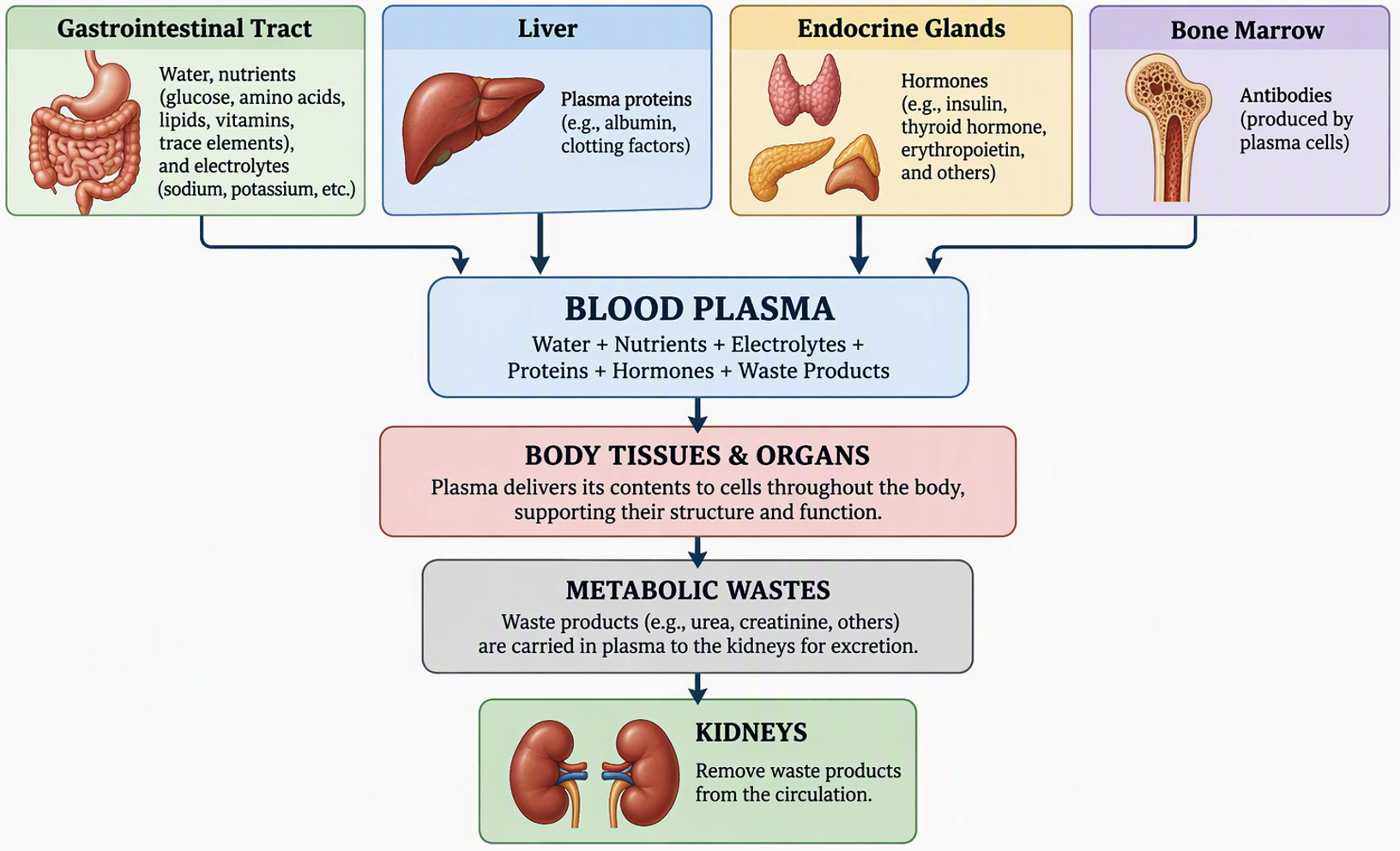
The first part of this series examined extracellular homeostasis with respect to several important chemical parameters, including oxygen, glucose, sodium, potassium, and calcium ions, each of which must be maintained within a relatively narrow range for survival. The second part of this series explored connective tissue, particularly the extracellular matrix, which is the structural framework that literally holds the body together and makes multicellular life possible. This included the coordinated processes involved in embryonic development, tissue maintenance, and wound healing. This third and final part of this series will examine the fluid compartments of the extracellular space and their contributions to normal physiological function. The first article will examine blood plasma, followed by a second on interstitial fluid and lymph. Subsequent articles will address the specialized transcellular fluids, including cerebrospinal fluid (CSF), synovial (joint) fluid, pleural, pericardial, and peritoneal fluids, ocular fluids, inner ear fluids, respiratory and gastrointestinal tract fluids, renal tubular fluid and perspiration. Although often overlooked, each of these extracellular fluid compartments contributes uniquely to the proper function and survival of the body. Before proceeding, however, it is necessary to review the basic physicochemical forces that govern fluid movement and distribution among these compartments. As noted previously (here), it is important to realize that the volume of the extracellular fluid compartment ultimately depends on the continual activity of the sodium-potassium pump, which maintains a high extracellular sodium concentration by moving sodium ions out of cells against their diffusion gradient. In other words, while diffusion tends to drive sodium back into cells to eliminate differences in sodium concentration, the sodium-potassium pump continually opposes this process. Because water in the body generally follows sodium by osmosis, this mechanism helps establish and maintain the volume of the extracellular space. In addition, as discussed earlier (here), maintenance of plasma volume depends on plasma proteins, especially albumin, generating sufficient colloidal osmotic pressure across the capillary wall to retain adequate water within the circulation. Blood plasma and lymph are therefore extracellular fluids contained within endothelial-lined vessels. Their volume is determined primarily by hydrostatic and osmotic forces acting across endothelial barriers. Plasma and lymph are not actively secreted fluids; rather, they are formed and modified through the exchange and redistribution of water and dissolved substances among the plasma, interstitial fluid, and lymphatic compartments. In contrast, transcellular fluids occupy specialized epithelial-lined compartments whose volume and composition are actively generated, regulated, and maintained by epithelial transport and secretory processes. Understanding this distinction between endothelial-lined and epithelial-lined fluid compartments provides a conceptual framework for understanding the origin, regulation, and physiological functions of the various extracellular fluids discussed in this part of the series. Blood Plasma All constituents of plasma have specific sources and destinations. Water, nutrients such as glucose, amino acids, lipids, vitamins, and trace elements, together with electrolytes such as sodium and potassium, enter the circulation primarily through absorption by the gastrointestinal tract. Plasma proteins, including albumin and clotting factors, are synthesized mainly by the liver, whereas antibodies are produced by plasma cells in the bone marrow. Hormones such as insulin, thyroid hormone, and erythropoietin (which stimulates red blood cell production in the bone marrow) are released into the bloodstream by endocrine glands and tissues, where they regulate the function of distant organs. Waste products generated by cellular metabolism, such as urea and creatinine, are transported in plasma to the kidneys for excretion. Thus, the composition of plasma reflects the integrated activities of multiple organs, while plasma itself serves as the primary transport medium linking the body's organs and tissues (see Fig.1).
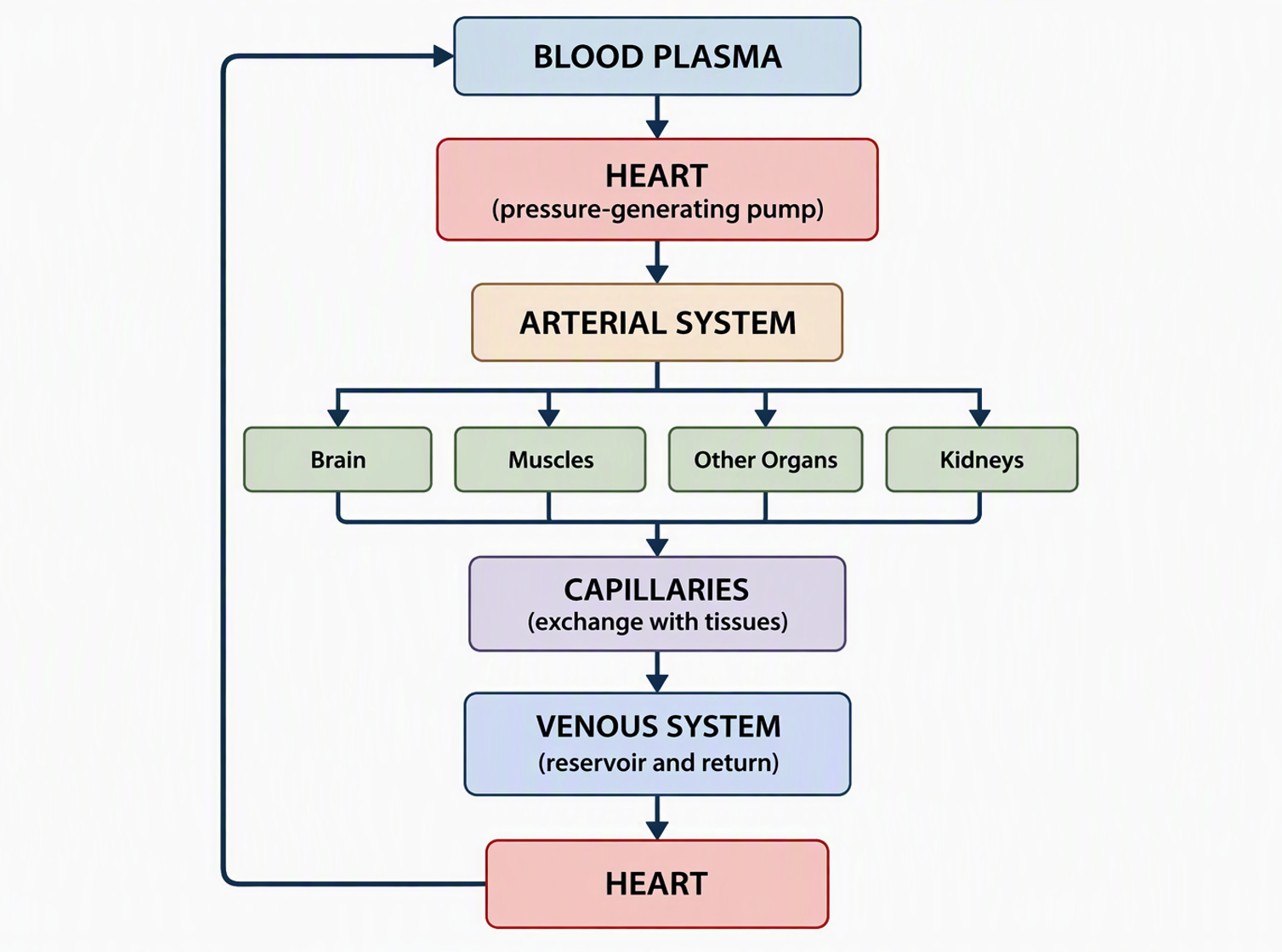
Hard Problem #1 Innovative Solution #1 But there's more! With each beat, the heart ejects a certain volume of blood known as the stroke volume. The product of stroke volume and heart rate determines the cardiac output, which represents the volume of blood pumped by the heart each minute. As this blood is ejected into the main arteries, it generates pressure against the arterial walls. It is this arterial blood pressure that provides the driving force for blood flow through the circulation and it has to be adequate to the task. However, adequate tissue perfusion depends on more than cardiac output and blood pressure alone. Blood flow is also influenced by the resistance offered by the blood vessels, particularly the small arteries and arterioles whose diameters can be adjusted to increase or decrease flow. Through the coordinated actions of the heart, blood vessels, and physiological control systems that regulate blood volume, cardiac performance, and vascular tone, the body maintains an appropriate arterial pressure and distributes blood flow among the organs according to their resting needs (see Fig. 2).
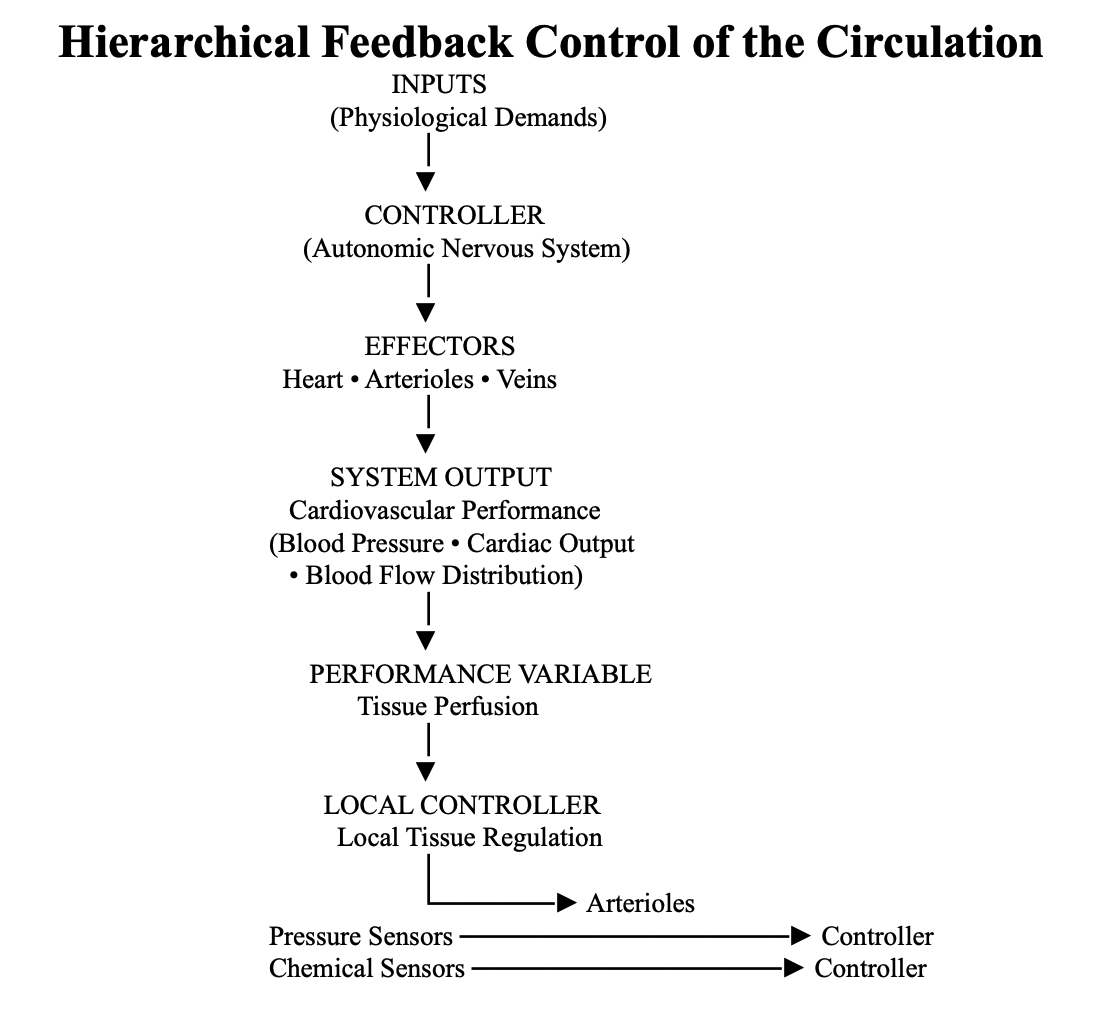
Yet maintaining an adequate circulation at rest is only part of the challenge. Hard Problem #2 Innovative Solution #2 To satisfy these demands, the body employs an integrated control system centered on the autonomic nervous system. By continuously monitoring the circulation and adjusting heart rate, cardiac contractility, vascular resistance, and venous tone, this system can rapidly alter cardiac output and redistribute blood flow according to changing circumstances. The autonomic nervous system accomplishes this task through two complementary divisions. In general, sympathetic stimulation increases heart rate and cardiac contractility, constricts veins to mobilize blood stored within the venous circulation to the arterial circulation, and regulates the tone of small arteries and arterioles to help maintain arterial pressure and distribute blood flow throughout the body. Parasympathetic activity generally produces opposing effects, slowing the heart and promoting a return toward resting conditions. Yet central control alone is insufficient. Individual tissues possess local regulatory mechanisms that allow blood flow to be matched to their own metabolic requirements. As the activity of a tissue increases, changes in oxygen tension, carbon dioxide concentration, pH, temperature, and other locally produced chemical signals promote dilation of nearby arterioles. This process, known as functional hyperemia, increases blood flow to active tissues, ensuring that oxygen and nutrient delivery remain closely matched to metabolic demand. Together, these central and local control mechanisms continuously coordinate cardiovascular performance. The autonomic nervous system maintains arterial pressure, regulates cardiac output, and redistributes blood flow throughout the body, while local tissues fine-tune their own perfusion according to their immediate metabolic needs. Working in concert with longer-term hormonal systems that regulate blood volume and vascular tone, they enable the circulation to respond appropriately to changes in posture, physical activity, digestion, environmental temperature, and other physiological challenges (see Fig. 3)
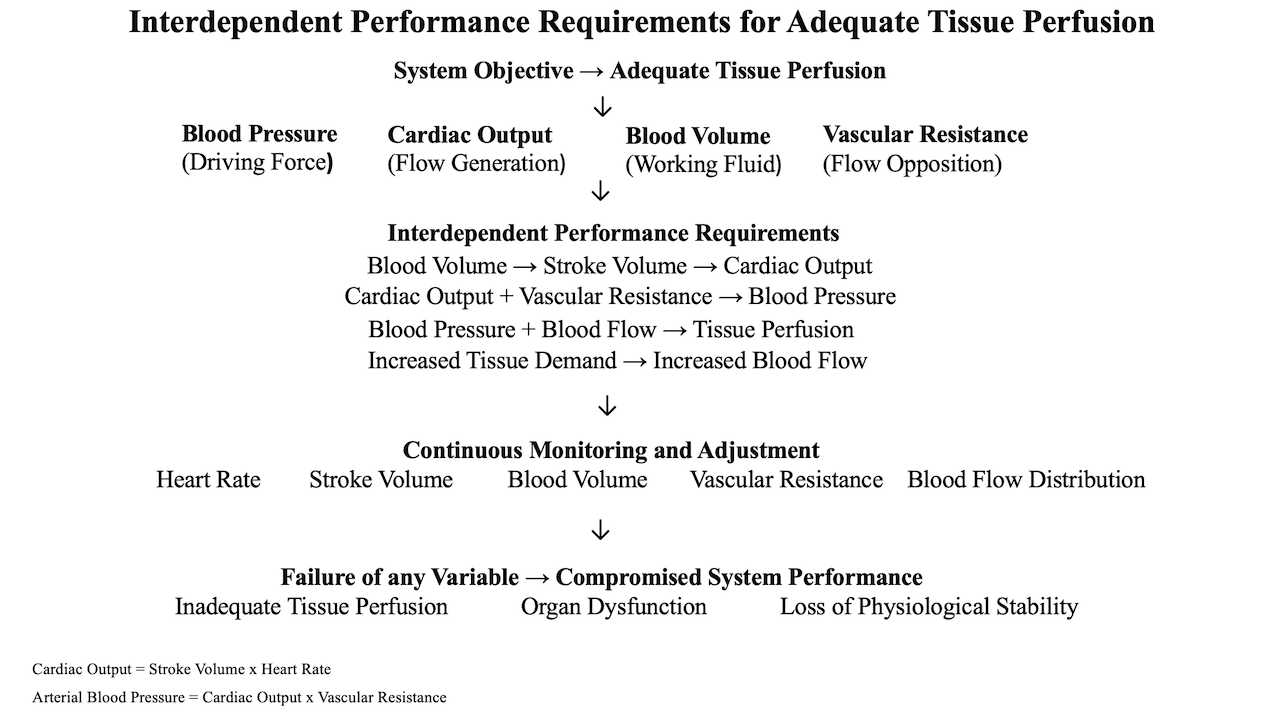
But there's even more! Real Numbers Have Real Consequences These are not arbitrary requirements. They are objective functional constraints imposed by the physical and physiological demands of the body. If any one of them falls below the minimum required level, normal cellular function begins to fail. For example, arterial blood pressure must remain high enough to drive blood through the tissues. This, in turn, requires an adequate cardiac output, which depends upon sufficient stroke volumes and heart rates. These relationships illustrate an important principle: many of the body's physiological requirements are interdependent, such that failure of one variable can compromise the performance of the entire system. Likewise, blood volume must be sufficient to fill the circulation and support the generation of an adequate cardiac output. At the same time, blood flow must be distributed in a manner consistent with the metabolic needs of individual tissues. During exercise, active skeletal muscles require substantially increased blood flow, yet arterial pressure must nevertheless be maintained and perfusion of other vital organs preserved (see Fig. 4)
Furthermore, these variables cannot simply reach their target values once and remain fixed. They must be continuously monitored and adjusted as conditions change. Standing up, eating a meal, exercising, experiencing emotional stress, or moving from a cool to a hot environment all alter the demands placed upon the circulation. The cardiovascular system must respond appropriately to each of these challenges while continuing to maintain adequate blood pressure, cardiac output, and tissue perfusion. The challenge posed by plasma transport is therefore not solved by a single structure, but by an integrated hierarchy of coordinated systems. Pumps, vessels, sensors, controllers, reservoirs, local feedback loops, and short- and long-term regulatory mechanisms must all function together while maintaining numerous physiological variables within quantitative limits compatible with life. The circulation succeeds not merely because its components exist, but because they are organized into a system capable of achieving specific functional objectives under continuously changing conditions. A Different Way to Look at the Evidence This approach was inspired in part by the ideas discussed in the paper "The Broad Utility of the Theory of Intelligent Design to Guide Scientific Research", published in BIO-Complexity (here), which argues that complex biological systems can be studied using principles commonly employed in systems engineering and design analysis. The authors suggest that insight can be gained by asking the same questions engineers ask when evaluating human-designed systems: Viewed through that lens, the challenge extends far beyond the mere existence of blood plasma and the cardiovascular system. The system first requires the coordinated activity of multiple organs capable of supplying and maintaining the constituents of plasma. It then requires a pressure-generating pump, a complex distribution network, fluid reservoirs, sensors, feedback mechanisms, local regulators, short-term neural controls, long-term hormonal controls, and numerous quantitative performance parameters that must remain within ranges compatible with life. These components must work together continuously to produce, transport, distribute, and dynamically regulate plasma and its contents throughout the body. Engineers routinely identify the products of intelligent activity by looking for features such as purposeful coordination of parts, hierarchical control systems, feedback regulation, functional integration, and the ability to achieve specified objectives. These same characteristics appear throughout the system described in this article. The organs that supply plasma constituents, the heart, blood vessels, autonomic nervous system, local autoregulatory mechanisms, and hormonal control systems do not function as isolated entities. Rather, they operate as an organized network whose purpose is to maintain the composition and distribution of plasma within physiological limits compatible with life. The purpose of this article has not been to determine how this system originated in the distant past. Rather, it has been to understand the components, control mechanisms, and performance requirements necessary for it to function successfully in the present to sustain human life. Whether the features described above are best interpreted as evidence of a blind undirected process like Darwinism or are more consistent with the principles of the Theory of Biological Design (TOBD) is ultimately left to the reader to decide.
|